Hand hygiene
Clean hands are the single most effective routine action for reducing the spread of infection.
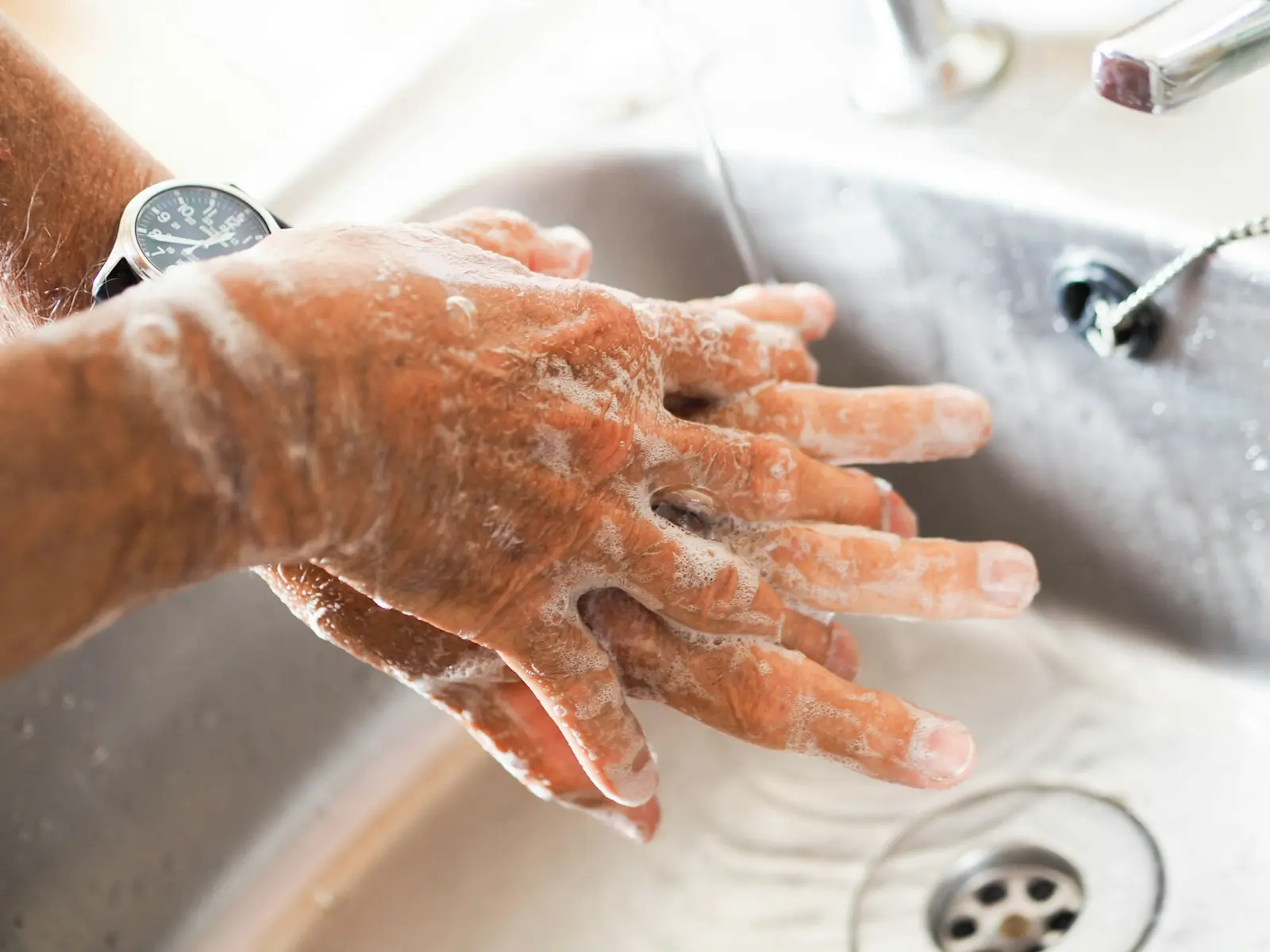
Why hands matter most
Most infections that spread in care and community settings are carried on hands. Clean hands at the right moments is the single most effective routine thing you can do — more effective than any other individual precaution.
The 5 moments
Clean your hands: (1) before touching a person, (2) before a clean or aseptic procedure, (3) after a body fluid exposure risk, (4) after touching a person, and (5) after touching a person's surroundings — the bed, chair, table or equipment around them.
Moments 1 and 2 protect the person you are caring for. Moments 3, 4 and 5 protect you and everyone you touch next.
Hand rub or soap and water?
Alcohol-based hand rub is the default when hands are not visibly dirty. It is faster, kinder to skin and more effective against most germs. Rub for about 20–30 seconds until hands are completely dry.
Use soap and water when hands are visibly soiled, after using the toilet, before handling food, and when caring for someone with gastroenteritis — some gastro germs are not reliably killed by alcohol. Wash for about 40–60 seconds, rinse and dry with a single-use towel.
Technique and skin care
Cover every surface: palms, backs of hands, between fingers, thumbs, fingertips and wrists. Thumbs and fingertips are the areas most often missed.
Keep nails short and free of artificial nails or polish, and remove rings and watches where your workplace requires it. Moisturise regularly — cracked skin holds more germs and makes people skip hand hygiene because it stings.
Key points
Clean hands before touching a person, before a procedure, after body fluid risk, after touching a person and after touching their surroundings.
Use alcohol-based hand rub when hands are visibly clean; wash with soap and water when visibly soiled.
Cover every surface, including thumbs, fingertips and between fingers.
Remove jewellery where required
Apply enough product
Rub all surfaces until dry
In disability support
Disability support
Carry a personal bottle of hand rub for community outings and vehicles where sinks aren't available.
Common mistakes
- Using gloves instead of hand hygiene rather than as well as it.
- Wiping hands dry on clothing before the hand rub has evaporated.
- Skipping moment 5 after touching only the person's surroundings.
On the job
Follow your workplace procedures, product instructions and supervisor guidance. If you are unsure, stop and ask before continuing the task.
Nice work. 7 modules to go before the assessment and your certificate.
Your goal
Certificate of completion
Disability Support
Your name · unique ID · QR verification
- Ready the same day you pass
- Employers can verify it online
- A$39 one-off, only after you pass