Infection control in cleaning work
Products, technique, colour coding and the cleans that carry extra risk.
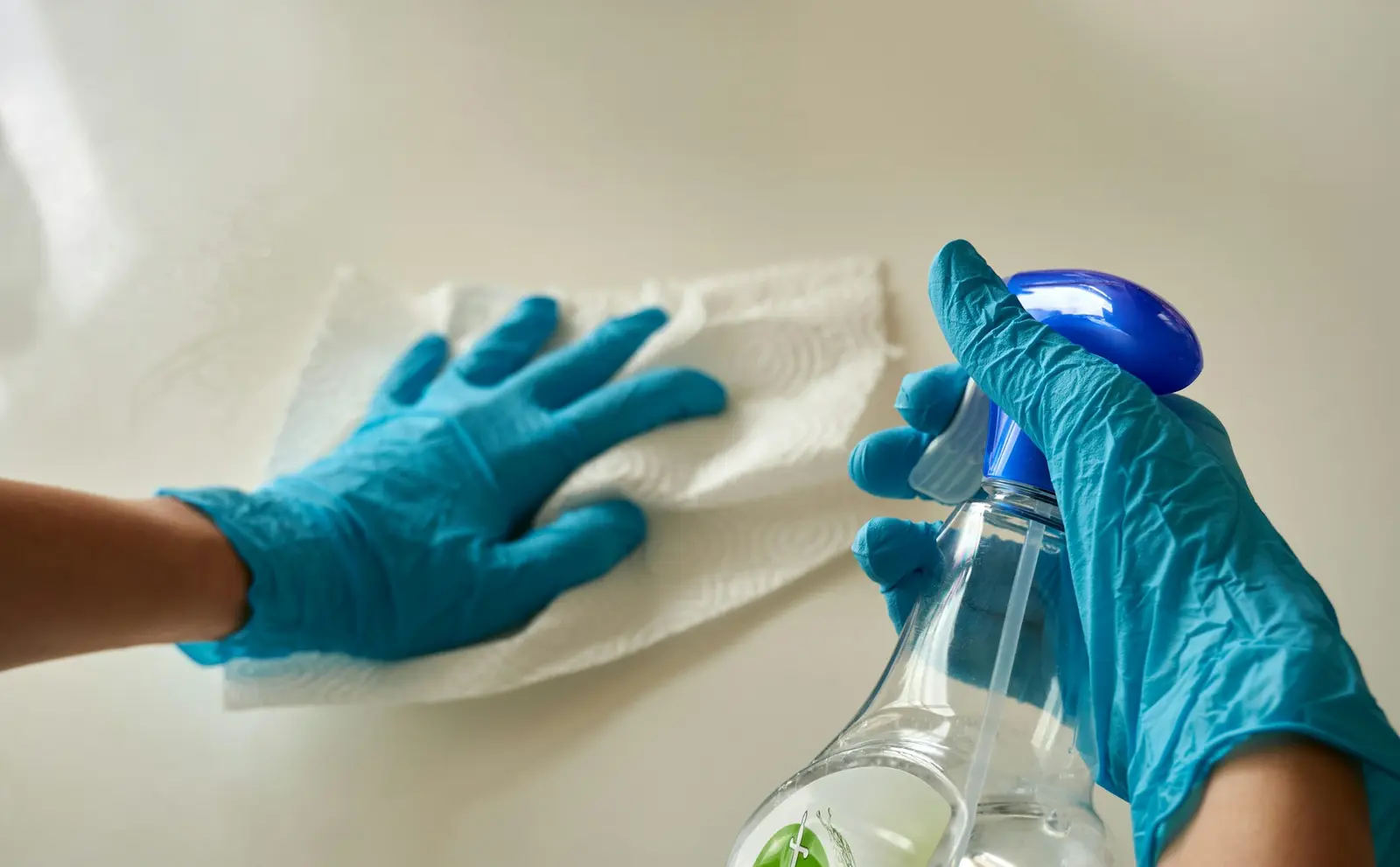
Right product, right way
Read the label for dilution, surface compatibility, PPE and contact time. Clean first, then disinfect — unless you're using a combined detergent-disinfectant. Never mix chemicals.
Colour coding and cloths
Use your site's colour-coded cloths, mops and buckets so bathroom equipment never reaches kitchens or care areas. Fold cloths to use clean faces, change mop water when it looks dirty, and launder or discard cloths as procedures require.
Higher-risk cleans
Isolation rooms, outbreak areas and body fluid spills need specific products, PPE and order of work. Follow the signage and the outbreak cleaning schedule exactly — including frequency.
Protect yourself
Treat every bin and bag as if it could contain a sharp: don't compress rubbish with your hands, and hold bags away from your body. Clean your hands every time you remove gloves.
Key points
Clean before you disinfect, and respect contact time.
Follow colour coding without exceptions.
Treat bins as if they could hide a sharp.
Read the label and gear up
Clean to dirty, high to low
Dispose, remove PPE, clean hands
On the job
Follow your workplace procedures, product instructions and supervisor guidance. If you are unsure, stop and ask before continuing the task.
You've finished the training! One step left: the 20-question assessment. Pass with 80% (unlimited attempts) to unlock your certificate.
Your goal
Certificate of completion
Cleaning & Facilities
Your name · unique ID · QR verification
- Ready the same day you pass
- Employers can verify it online
- A$39 one-off, only after you pass